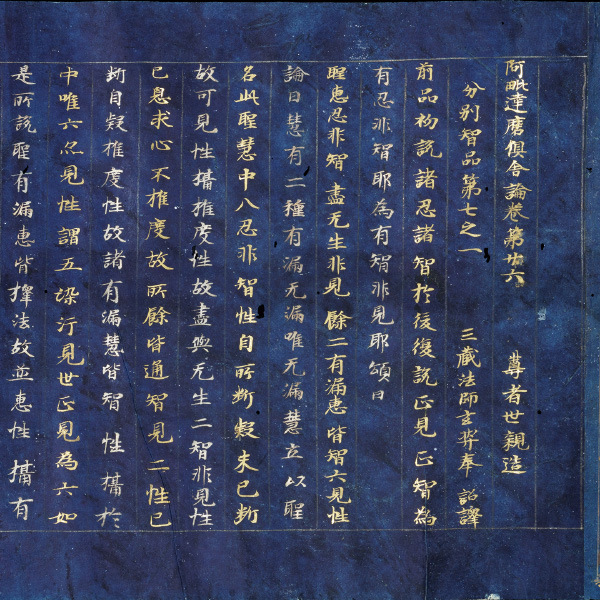
紺紙金銀字交書阿毘達磨倶舎論巻二十六

紺紙金銀字交書阿毘達磨倶舎論巻二十六(中尊寺経)

紺紙金銀字交書阿毘達磨倶舎論巻二十六

・年代:平安時代後期(12世紀)
・法量:縦25.3㎝ 横874.0㎝
・指定:重要美術品

The Abhidharma-kosa-bhasya, Scroll 26, Written in Alternating Gold and Silver Characters on Dark Blue Paper (Chusonji Sutra)
Period: Late Heian period (12th century)
Dimensions: Height 25.3 cm, Width 874.0 cm
Designation: Important Cultural Property

平安時代後期に東北地方一帯を支配した奥州藤原氏の祖、藤原清衡が永久五年(1117年)2月頃に発願、天治三年(1126)3月に完成した経巻で、岩手県平泉の中尊寺に伝来したことから中尊寺経と呼ばれています。紺紙に金粉・銀粉を膠で溶いた金泥・銀泥を交互に用いて書写した装飾経で、見返しには霊鷲山で釈迦如来が、菩薩や仏弟子たちに説法する様が繊細な筆致で描かれています。本経は代表的な経典・仏典を集成した一切経の一巻として制作されたもので、当初は5400巻あったと考えられますが、現在は中尊寺に15巻、高野山金剛峰寺に4296巻(いすれも国宝)伝来するほか、およそ4600巻が現存しているとされています。

The "Chusonji Sutra" is a scroll initiated by Fujiwara no Kiyohira, the founder of the Oshu Fujiwara clan that ruled the Tohoku region in the late Heian period. He began the project around February 1117 (Eikyū 5) and completed it in March 1126 (Tenji 3). Named after its transmission to Chusonji Temple in Hiraizumi, Iwate Prefecture, this decorative sutra was transcribed using alternating gold and silver mud dissolved in glue on dark blue paper. The frontispiece delicately depicts Shakyamuni Buddha preaching to bodhisattvas and disciples at Vulture Peak.

This sutra was created as part of a complete collection of representative sutras and Buddhist scriptures, originally thought to consist of 5,400 volumes. Currently, 15 volumes are preserved at Chusonji Temple, 4,296 volumes at Kongobuji Temple on Mount Koya (both designated as National Treasures), and approximately 4,600 volumes are believed to exist.

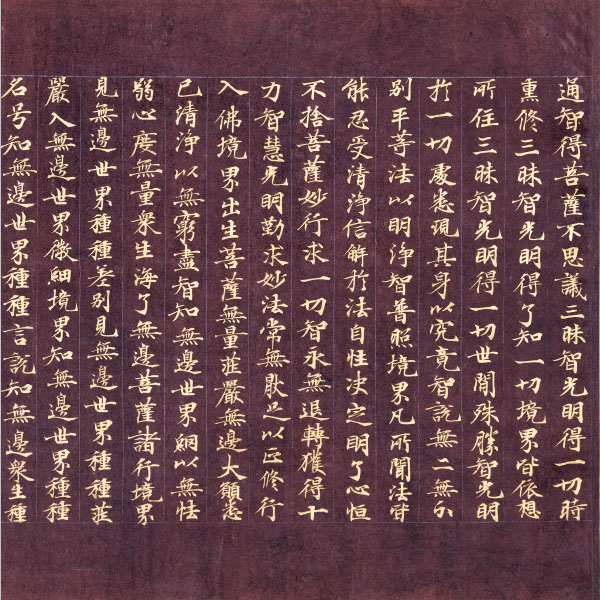
紺紙金字金剛三昧経巻上(神護寺経)

紺紙金字金剛三昧経巻上(神護寺経)

紺紙金字金剛三昧経巻上(神護寺経)

・年代:平安時代後期(12世紀)
・法量:縦26.1㎝ 横779.9㎝

The Vajrasamadhi Sutra, Scroll 1, Written in Gold Characters on Dark Blue Paper (Jingoji Sutra)
Period: Late Heian period (12th century)
Dimensions: Height 26.1 cm, Width 779.9 cm

鳥羽天皇(1103~1156年)が発願して制作された一切経で、後白河法皇(1127~1192)が神護寺に奉納、長くこの寺に伝えられたことから神護寺経と呼ばれる経典。巻首内題下に「神護寺経」の朱印が押されています。主要な経典や仏教書を集成したものを一切経と言い、平安時代には一切経を紺紙金字経で揃える例が盛行しますが、本経はその代表的な作例で、もとは5400巻あったと考えられますが、現在、神護寺に2317巻が現存、重要文化財に指定されているほか、多くが寺外に流出し、各地の美術館・博物館、寺院、個人に分蔵されています。紺紙に金字で書写された経文は、夜空に輝く星のように美しく魅力的です。また、表紙見返しには、釈尊の浄土とされる鷲の姿をした霊鷲山を背景に坐す釈迦如来の説法を、二人の仏弟子と菩薩が聴聞する場面が金泥・銀泥を用いて描かれています。

The "Jingoji Sutra" is a complete collection of sutras initiated by Emperor Toba (1103-1156) and dedicated to Jingoji Temple by Emperor Go-Shirakawa (1127-1192). It is called the "Jingoji Sutra" because it was long transmitted at this temple. A red seal with the inscription "Jingoji Sutra" is stamped below the title at the beginning of the scroll. A complete collection of major sutras and Buddhist scriptures is known as an Issaikyo, and during the Heian period, it was popular to compile these collections using gold ink on dark blue paper. This sutra is a representative example of such works. Originally thought to consist of 5,400 volumes, 2,317 volumes are currently preserved at Jingoji Temple and designated as Important Cultural Properties. Many volumes have been dispersed outside the temple and are now held in various museums, temples, and private collections.

The sutra text, written in gold ink on dark blue paper, is as beautiful and captivating as stars shining in the night sky. Additionally, the frontispiece depicts Shakyamuni Buddha preaching at Vulture Peak, with two disciples and bodhisattvas listening attentively, using gold and silver mud.

上原美術館